Portfolio > Asset Work >
Table Toys | Repository
As tech artist for Split Chance's C&B, I made Table Toys as a collection of prototypes for various frontend facets of the game. These range from shaders I made for game artists to use, and setups for 3D assets to function as interactive UI elements.
For the most part, these prototypes use placeholder assets taken from Ultimate Low Poly Dungeon by Broken Vector on the Unity Asset Store.
Others are from artists on the C&B team, credited individually. As part of my job as team tech artist, I would take artist models and edit them keep their scale/fidelity consistent with other assets, and to divide their geometry for whatever scripted implementation I would program them for.
Wax Seals Assets/Scenes/seals.unity
C&B is played with cards, some featuring a wax seal with an icon corresponding with the card's ability. Initially, game artists were using a geometry-based approach, but this would have been frustrating for our workflow, and unforgiving for revisions.
As a solution, I created a unity Shader Graph shader that would take a monochrome image file and generate diffuse, normal, and specular maps dynamically. With this, artists could work on quickly producing these monochrome icons, and it was little issue to tweak said icons during testing. Colours could also be changed for anything using the shader, or per-individual materials using the shader. With a single seal mesh, we could make any number of seals for cards as long as we had the icon for them.
Wax seal model and seal icons created by Rachel Appleyard
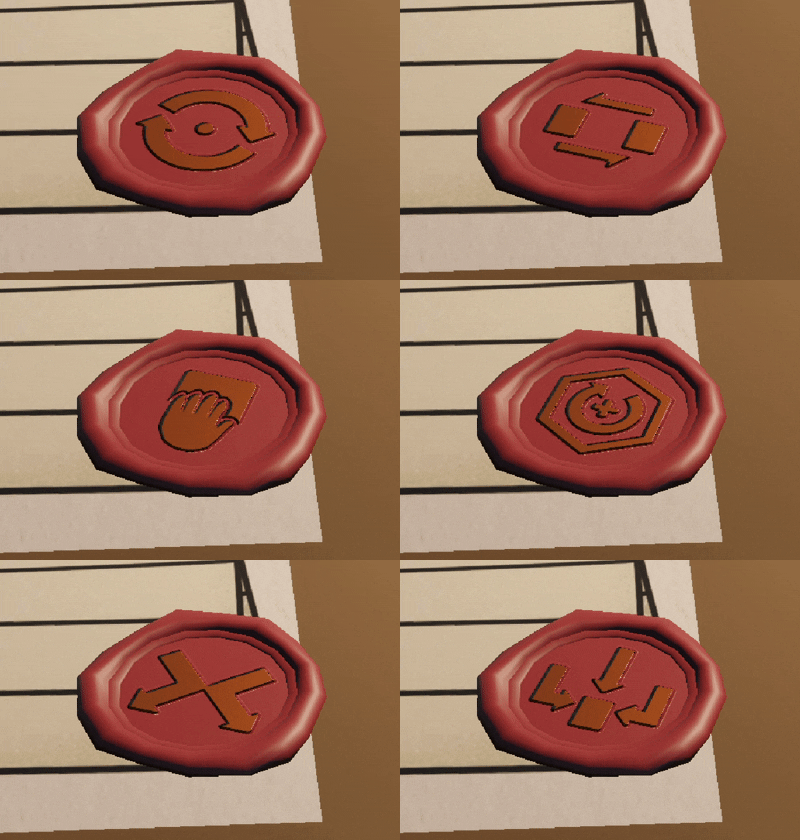
An example script cycling through different textures, the shader creating texture maps in real time.
Rule Book Assets/Scenes/book.unity
I created the logic for a book with changing pages for an earlier project, though without proper animations, the illusion wasn't as convincing. Here, I created some homemade animations for a book mesh, using an array of textures to swap between different pages (which is upwardly scalable for as many page textures as you want).
There are several materials handling pages, including some for the flipping pages that only appear when the pages turn, that swap at the right times to create the illusion of turning to a new page. All in all, it creates a convincing book that adds some atmosphere to the tabletop setting of C&B.
While the animations aren't perfect (I had to offset the flipping pages to prevent clipping), with a better looking mesh and animation from a dedicated artist, this script and setup would go a long way.
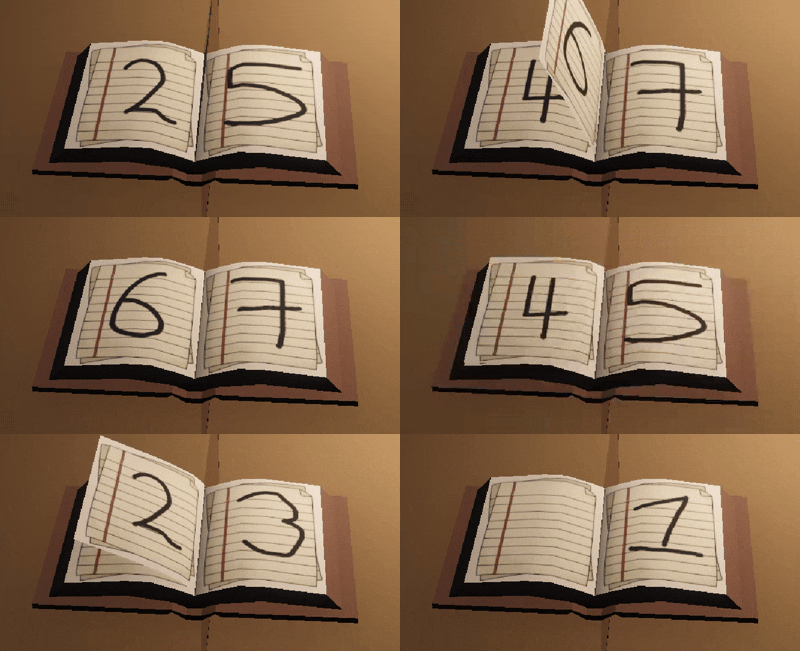
Book flipping back and forth, showing example pages.
Abacus Assets/Scenes/abacus_mult.unity
One of the first prototypes I made for C&B, the abacus was a means to track player resources.
The abacus has a straightforward implementation, with each rung having three arrays: one for the bead objects, one for the forward positions, and one for the backward positions. Theoretically, any number of beads could be added to rungs and the script would handle whatever was added to the arrays. The amount of beads was controlled with a single index, allowing for simple logic and debugging.
Abacus model created by Rachel Appleyard
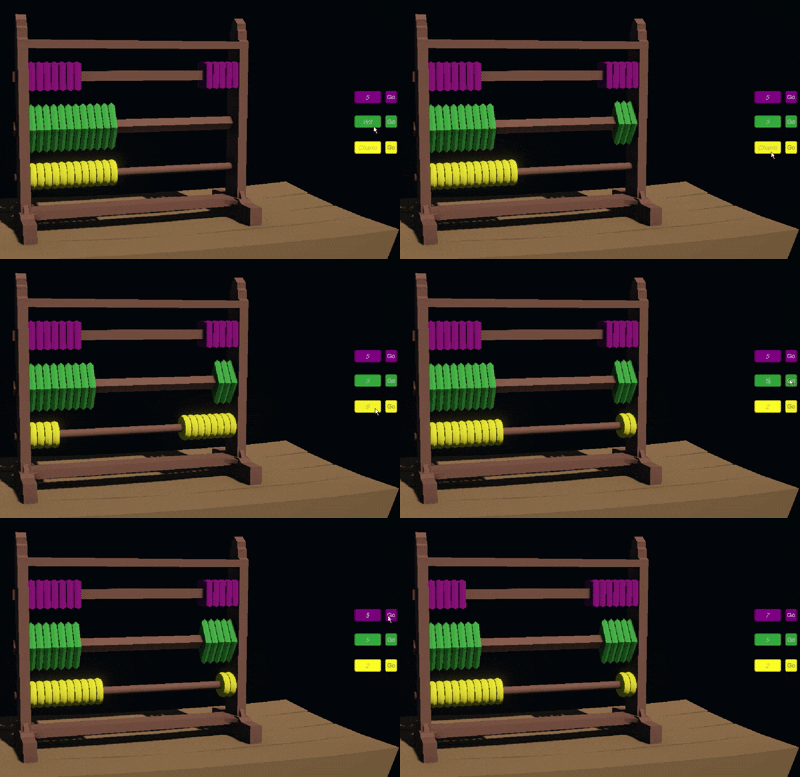
Example rig of the abacus for C&B, using inputted values.
Candle Assets/Scenes/candle.unity
The candle was a fun idea for an in-game health meter. With no way for players to regain lost health, the candle made for a straightforward metaphor.
Following the style of older time-keeping candles, each peg represents a point of player HP. After reaching a critical threshhold (similar to the low health music in games like Pokémon), the flame begins to flicker and the its colour becomes deeper. Each falling peg makes a sound, signposting HP loss diegetically.
Similar to the other items, the pegs are stored in an array and can be scaled up or down as game balancing requires.
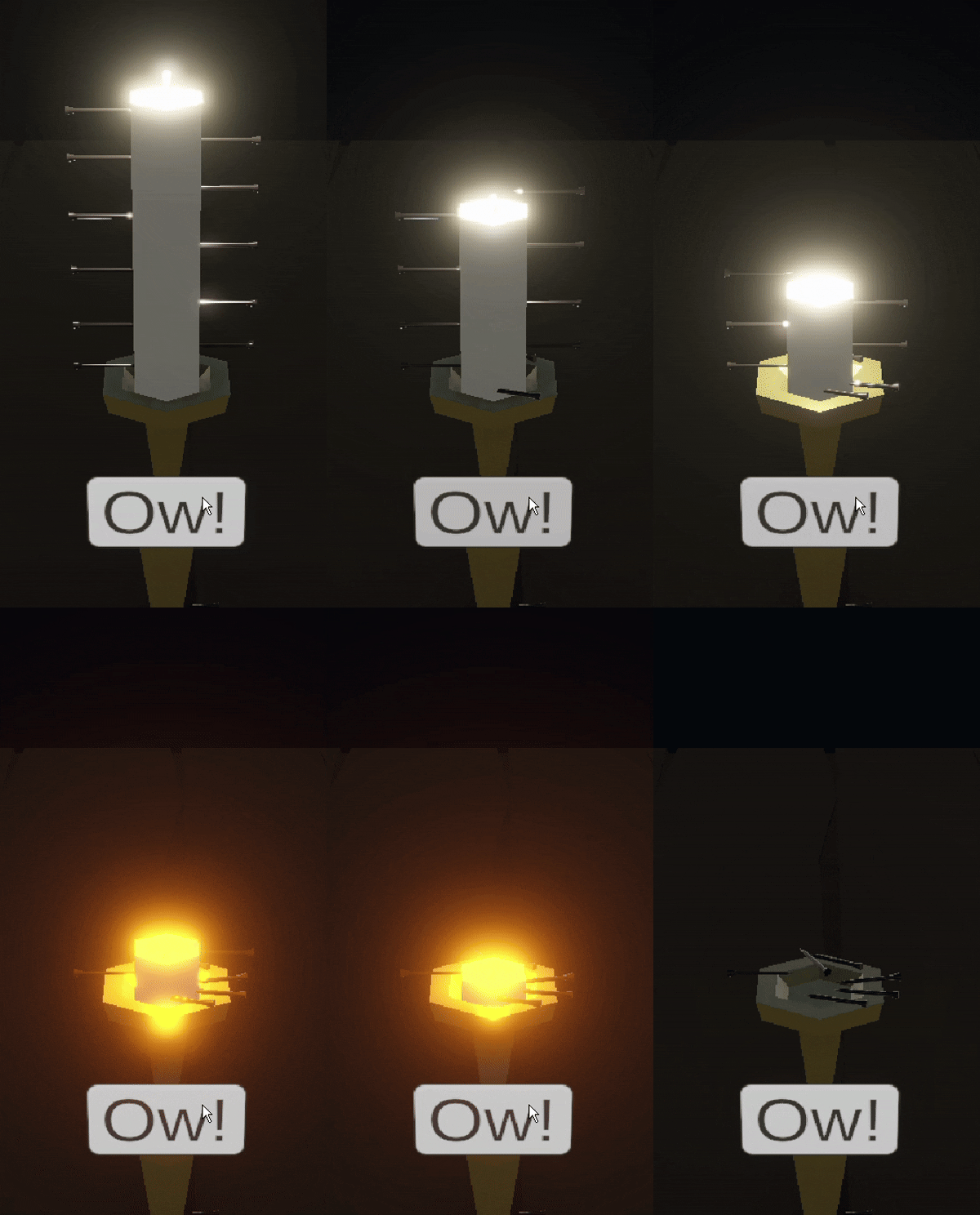
The candle cycling through its pegs in a test demo.