Castle Ysres | Repository
Fantasy exploration in the bowels of a colonial capital.
Castle Ysres is a solo-developed immersive VR experience where the player explores a castle built by a continent-spanning empire. Lost in the castle's dungeon, the player character's previous status in society offers very little comfort while delving into the twisting passages.
The experience is set in the fantasy land of Corvana, previously featured in another game of mine, Crisis At Howelton. Here, I wanted to show the weirder side of Granthart, the elven province that Castle Ysres was built in, its dungeon being chock-full of secrets and intrigue.
I went into designing Castle Ysres as a formless adventure, focusing on a variety of individual interactions than an overarching plot or end goal. I always imagined that the player might encounter an exit, but I prefered to have it as a sprawling experience where the player simply explored.
To add to the adventure and atmosphere, I implemented some randomisation features within the level design so no two playthroughs were the same, supported by a large pool of content and puzzles that the player can encounter. Drawing on older dungeon-delving games, I wanted to create an environment that felt old and sprawling, levels going deeper into the earth and evoking more mystery from the setting.
Here are a selection of features that I implemented, using Unity and its VR development tools. Like many of my projects, I used assets from Ultimate Low Poly Dungeon as placeholders.
The Ultimate Low Poly Dungeon asset pack came with a tileset of hallway pieces, and I wanted to see if it was possible to make a way to create a variable dungeon generator. By programming prefab hallway pieces that would place other prefabs, you could set the number of generation cycles before runtime to create a dungeon of a specific size. While not wholly intelligent, hallway segments will not generate if they detect obstacles in front of them, instead placing a dead end.
I also added logic that would generate random furniture in some of the prefabs, creating reasonably cluttered hallways that could accept any number of furniture and clutter layouts.
As part of a cohesive experience, this system would make exploration less predictable; players could find some treasures and curios, or even NPC or narrative encounters in one playthrough and different ones in another. With the dungeon's creepy atmosphere as well, I liked how uneasy the twisting, narrow hallways felt.
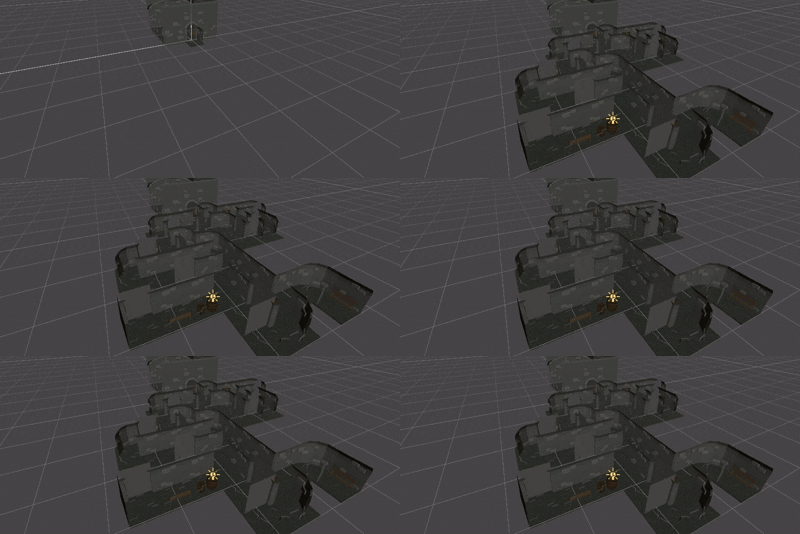
An example of the hallway generation being run.
Thomas West MMXXIV - MMXXVI